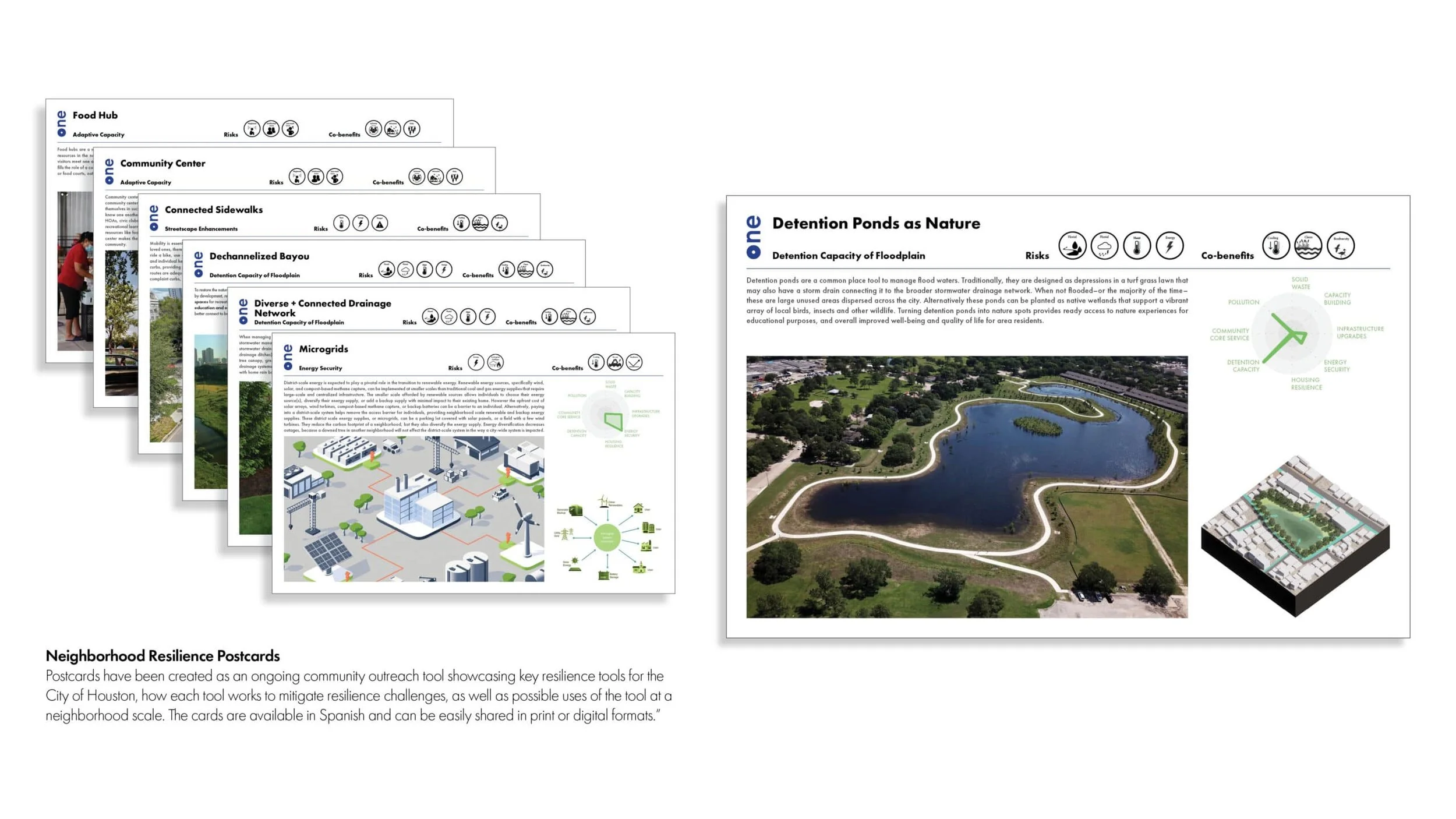
Houston Neighborhood Resilience Plans
2022 - 2023
Houston, TX, USA
The Houston Resilient Neighborhood Planning project implements a key goal of Resilient Houston, to develop 50 neighborhood plans by 2030, and is the first of its kind in Houston. It serves the purpose of providing a strategic action plan to achieve Resilient Houston’s goals and targets at the neighborhood scale. It makes recommendations for people-based and placed-based strategies and actions to improve neighborhood resilience now and into the future.
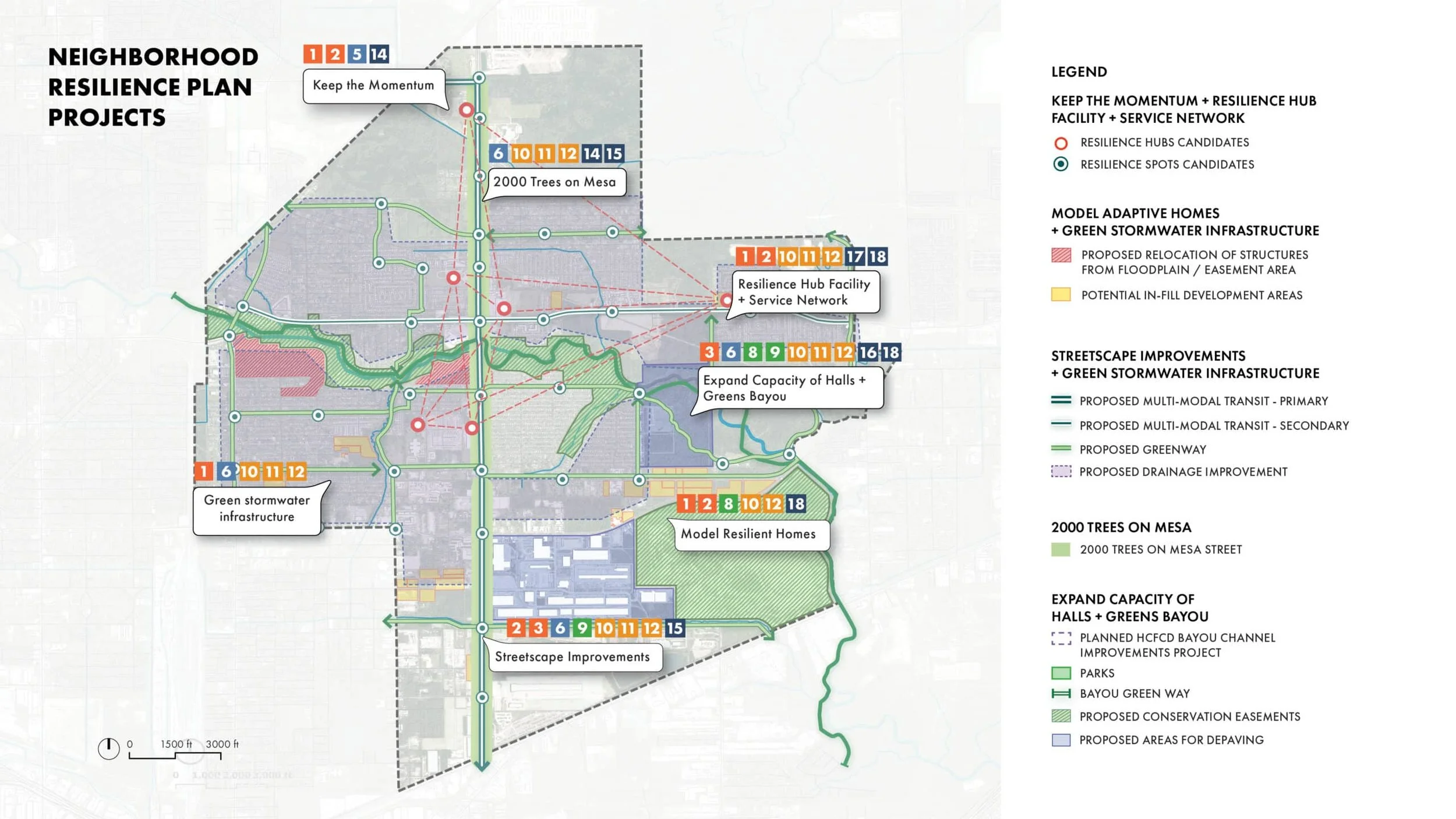
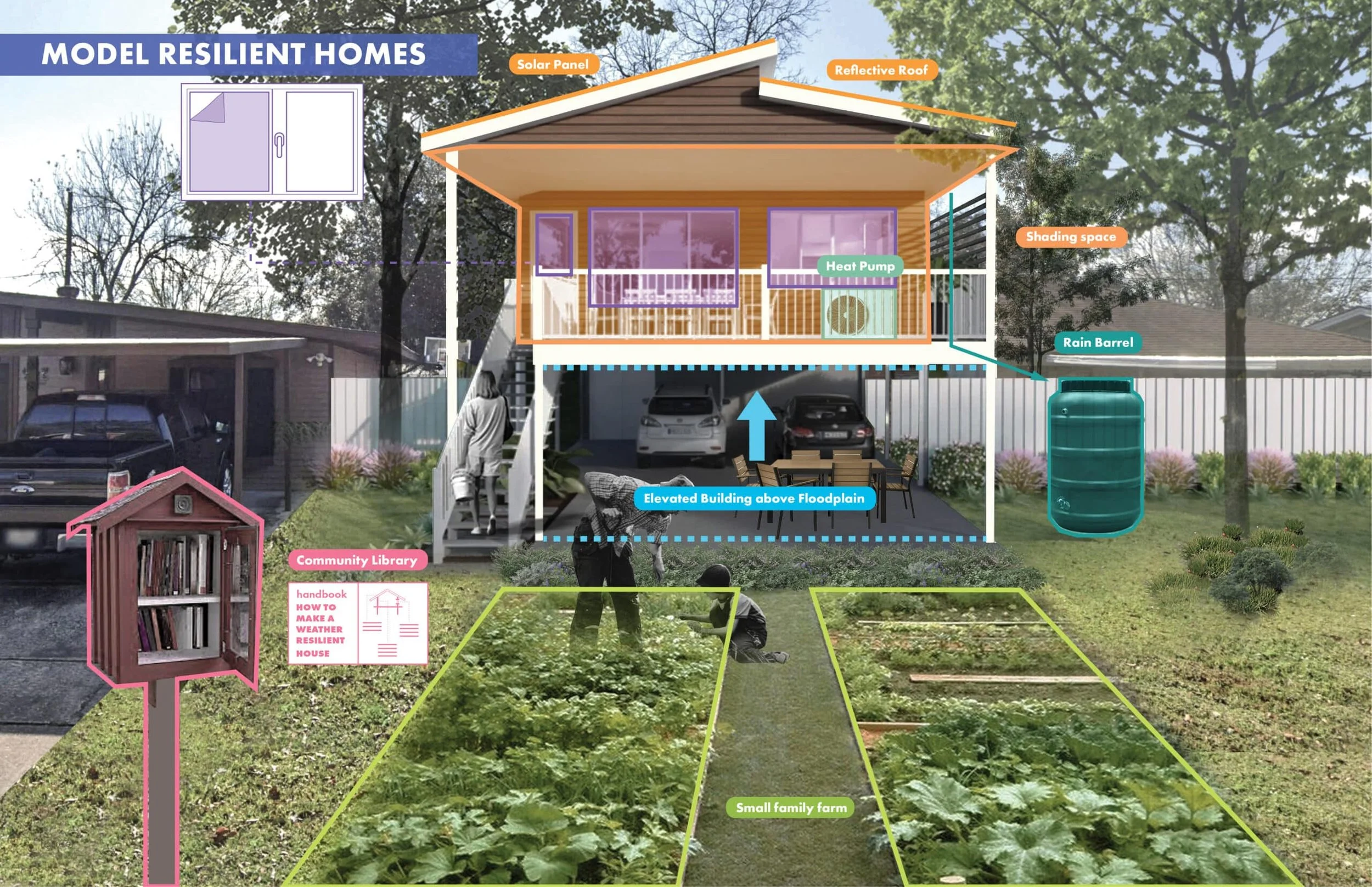
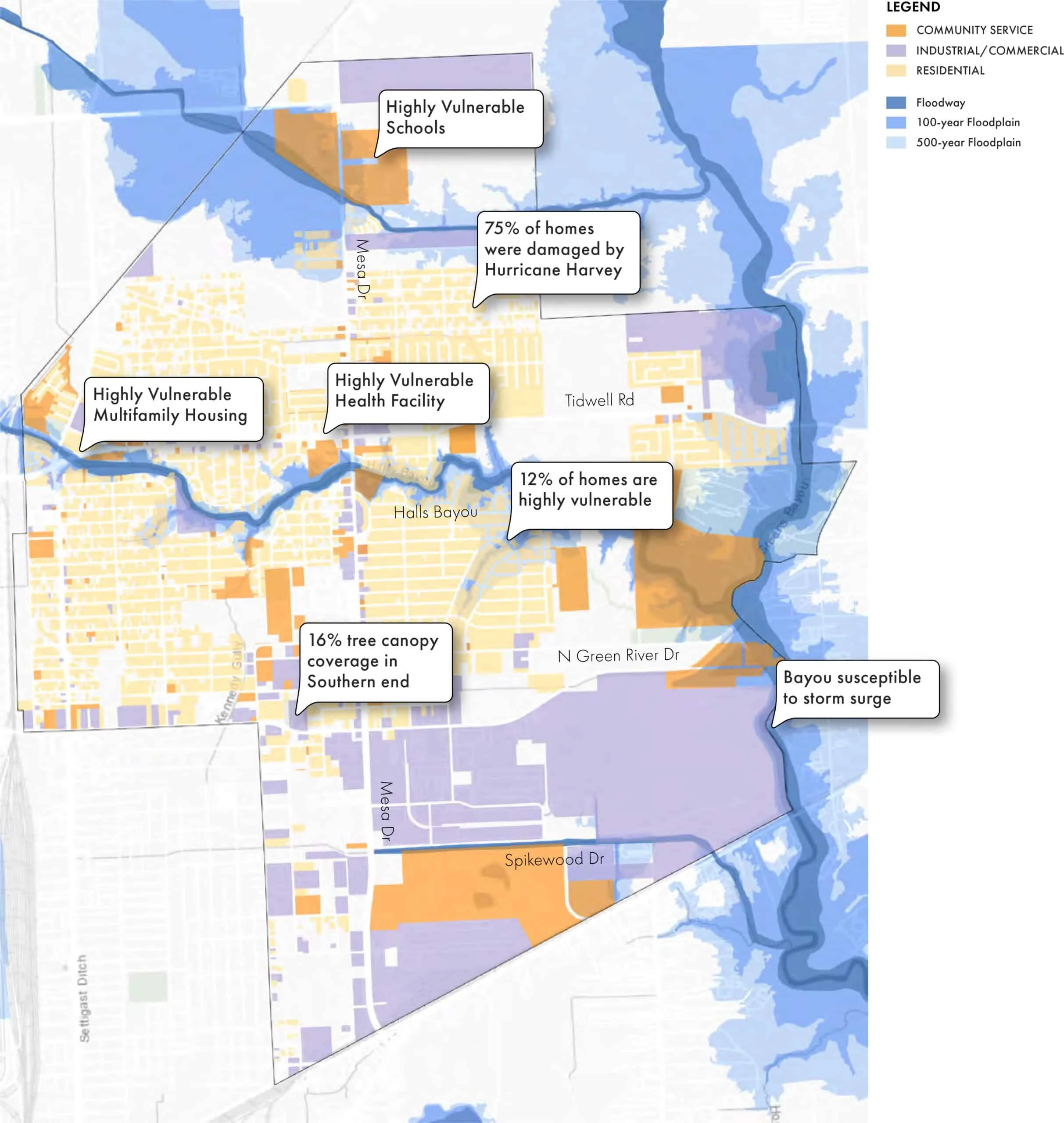
A Neighborhood Resilience Plan takes direction from Resilient Houston by incorporating climate adaptation and risk reduction and infrastructure modernization, housing stability and security, healthy clean environment, social empowerment, economic development, and heat mitigation into place-based strategies for the community. The plan serves as a tool to direct neighborhood-based investments into practical and tangible projects to reduce flooding, manage heat, and address physical and social vulnerabilities to climate and other hazards. Simultaneously, the plan works to improve the overall quality of life and economic opportunities in the community.
In a 15-month process, the planning team was in active conversation with the first 3 communities as part of the formulation of 3 distinct Neighborhood Resilience Plans, as well as a replicable strategy to roll out to the other 47 neighborhoods. The team took direction from the community through traditional public meetings and surveys, focused one-on-one conversations with community leaders, and working sessions with the Neighborhood Support Team (NST) and proactive residents. The directives heard in these meetings provide the basis of the plan’s development and resulting recommendations. The community’s directives have been vetted and coordinated with City staff through several Technical Advisory Committee (TAC) meetings intended to ensure the plan’s feasibility, identify lead agencies, and identify or allocate potential funds to implement projects.